You check your phone for a moment—just to reply to a message.
When you look up, 20 minutes are gone.
Not because you chose to scroll, but because your attention quietly slipped away.
In 2025, this isn’t a personal failure. It’s the default environment.
Current data from the CDC and Pew Research Center shows that digital engagement is reaching critical levels in 2025. Roughly 50% of U.S. teenagers now spend 4 or more hours per day on screens for non-school activities, while recent industry reports show the average U.S. adult now spends between 7 and 8 hours per day across all devices. That “7-hour mark” matters—because past it, many people report significant mental fatigue, reduced focus, and a 2x increase in symptoms of anxiety and depression.
This is where digital detox stops being a wellness buzzword and becomes a practical skill.
A digital detox isn’t about quitting technology or going off-grid. It’s about regaining control over your attention—and deciding when technology deserves it.
This guide explains what a digital detox really is, why it matters more than ever in 2025, how to do it realistically, and how to make the benefits last.
TL;DR: What a Digital Detox Really Does
A digital detox helps reduce constant digital overstimulation so your brain can regain balance. When done intentionally, it often:
-
Restores attention control
-
Reduces cognitive overload
-
Improves sleep quality
-
Strengthens presence in relationships
-
Works best with structure—not extremes
What Is a Digital Detox?
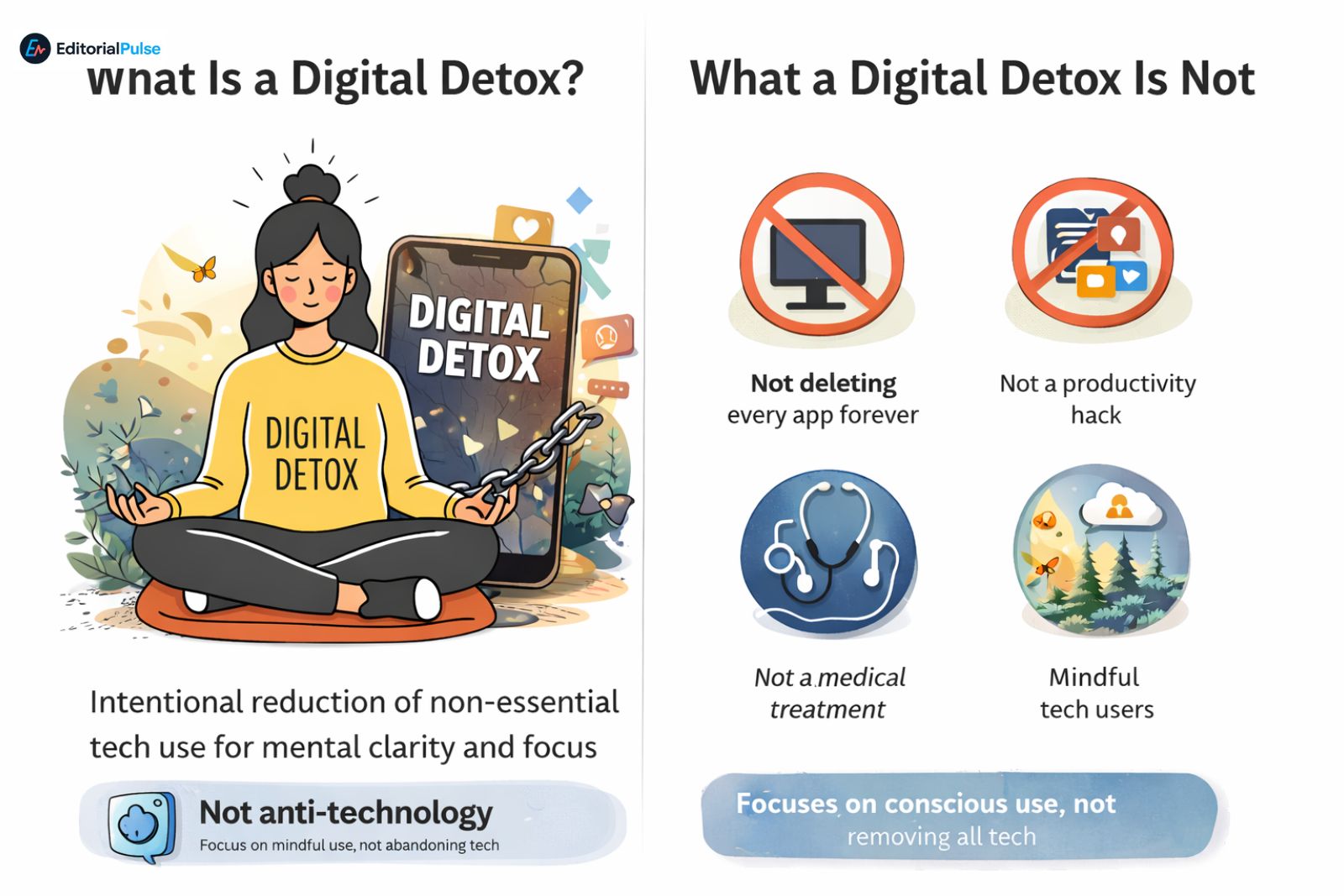
A digital detox is a deliberate reduction of non-essential digital use, especially endless scrolling, social media, and algorithm-driven content, to support mental clarity and focus.
In simple terms:
It’s choosing intentional use over reflexive consumption.
What a Digital Detox Is Not
-
Not anti-technology
-
Not deleting every app forever
-
Not a productivity hack
-
Not a medical treatment
The goal isn’t less tech—it’s less unconscious use.
Who This Digital Detox Is (and Isn’t) For
This guide is for you if:
-
You feel mentally overstimulated or distracted
-
You open apps without meaning to
-
You want better focus or sleep
-
You want to feel more present in daily life
This guide is not for you if:
-
You want to abandon technology entirely
-
You expect instant or permanent results
-
You’re seeking a replacement for professional mental health care
A digital detox works best as a behavioral reset, not an escape from modern life.
Why Digital Detox Matters More in 2025 Than Ever
Technology didn’t just get faster—it got smarter at keeping you hooked.
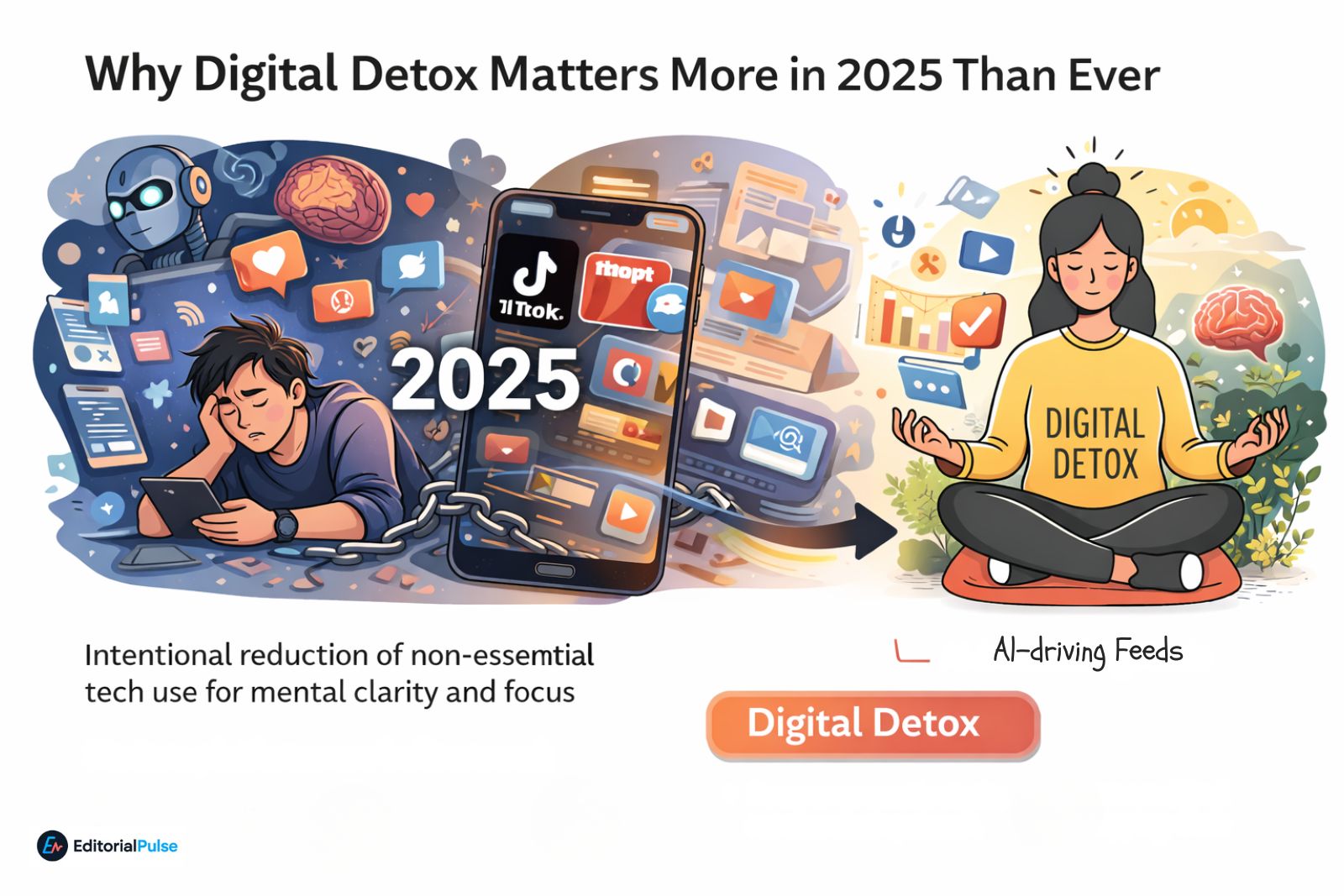
Modern platforms are built around:
-
Infinite scrolling
-
Variable reward schedules
-
Social validation loops
-
Hyper-personalized recommendations
Each interruption creates attention residue, a well-established cognitive effect where part of your mind stays stuck on the previous task. Over time, this fragments focus and increases mental fatigue.
The 2025 Reality: AI-Driven Infinite Feeds
In 2025, concerns aren’t just about “screen time”—they’re about AI-powered infinite feeds, especially on platforms like TikTok and Instagram Reels.
These systems don’t just show content. They:
-
Predict what will hold your attention
-
Optimize emotional reactions
-
Remove natural stopping cues
That’s why many people report scrolling far longer than intended, even when the content isn’t especially meaningful. A digital detox interrupts this algorithmic momentum before it becomes your default state. Some users also create friction by adjusting how content is delivered—such as limiting tracking or using attention-protective browsing tools to reduce hyper-personalized feeds.
Digital Detox and Sleep: What Research Supports
Research from Harvard Medical School shows that blue light exposure in the evening suppresses melatonin production and disrupts circadian rhythms. Combined with cognitive stimulation, late-night scrolling makes it harder to fall asleep and stay asleep.
Reducing evening screen exposure is one of the most consistently reported benefits of a digital detox.
Benefits of a Digital Detox

Mental and Emotional Effects
Many people report:
-
Improved emotional regulation
-
Reduced baseline anxiety
-
A greater sense of mental calm
These effects are typically linked to reduced overstimulation—not dramatic brain changes.
Focus and Cognitive Clarity
Commonly reported improvements include:
-
Longer attention spans
-
Fewer mental “resets”
-
Reduced decision fatigue
Sleep Quality
People often notice:
-
Faster sleep onset
-
Deeper rest
-
More consistent energy
Relationships and Presence
Less screen distraction often leads to:
-
Better listening
-
More presence in conversations
-
Fewer automatic interruptions
How to Do a Digital Detox (Step-by-Step)
Step 1: Choose a Detox Format
| Detox Type | Best For |
|---|---|
| 24-hour detox | Awareness & beginners |
| 7-day detox | Habit reset |
| 30-day detox | Sustainable change |
| App-specific detox | Social media overload |
You don’t need extremes to see benefits.
Step 2: Set Clear Boundaries
Examples:
-
No social media apps for 7 days
-
Phone-free mornings until 10 a.m.
-
No screens 90 minutes before bed
-
Messages and calls only
Specific rules outperform vague intentions.
Step 3: Expect Withdrawal (Normal, Temporary)
Possible short-term effects:
-
Restlessness
-
Boredom
-
Phantom vibrations
-
Urge to “check quickly”
These usually peak within a few days and fade. They reflect habit disruption—not dependency failure.
Step 4: Replace, Don’t Just Remove
A digital detox works best when you replace low-quality stimulation, not just remove it. The brain still needs input—just better input.
Healthy replacements include:
-
Walking
-
Reading
-
Journaling
-
Light exercise
-
Face-to-face interaction
Movement is especially effective because it satisfies the brain’s need for stimulation without overstimulation. Even simple daily walks can help regulate attention and reduce compulsive phone-checking. Some people reinforce this habit using walking-based motivation systems that encourage movement without pulling attention back into endless scrolling.
The 3-Layer Digital Detox Framework
1. Reduce
-
Disable non-essential notifications
-
Remove high-dopamine apps temporarily
2. Replace
-
Introduce intentional offline habits
-
Create phone-free blocks
3. Reset
-
Redefine the purpose of each app
-
Establish long-term boundaries
This turns detoxing into behavior change, not deprivation.
Digital Detox in the Age of AI
Today’s digital overload is largely algorithmic.

AI-generated influencers, hyper-curated feeds, and synthetic perfection amplify comparison stress and emotional engagement.
A modern digital detox may include:
-
Muting AI-curated “perfect life” content
-
Reducing exposure to infinite recommendation loops
-
Limiting time on short-form video platforms
The detox isn’t anti-AI—it’s attention-aware. In 2025, the issue isn’t artificial intelligence itself, but how AI-driven systems continuously optimize for engagement, often at the cost of mental clarity. As explored in our breakdown of modern web and app activity patterns, most users aren’t consciously choosing how they spend their screen time—algorithms are quietly making those decisions for them. A digital detox restores that choice by helping you step back, observe these patterns, and re-establish intentional use.
Common Digital Detox Mistakes
-
Going cold turkey without structure
-
Expecting instant clarity
-
Treating detox as punishment
-
Returning to old habits unchanged
Sustainable detoxing is gradual and intentional.
Digital Detox Apps, Programs, and Retreats
My Favorite 2025 Digital Detox Tools
If you’re a beginner, tools can help when used intentionally:
-
Forest – Encourages focus by growing a virtual tree while you stay off your phone. Simple and surprisingly effective.
-
Opal – Deep-blocks distracting apps during focus windows. Ideal if social media habits are hard to control.
Use tools to train habits, not outsource discipline.
Digital Detox and Mental Health
A digital detox can:
-
Reduce overstimulation
-
Support emotional regulation
-
Improve focus and sleep
It does not replace therapy or medical care. Think of it as mental hygiene, not treatment.
Quick Digital Detox Checklist
-
☐ Turn off non-essential notifications
-
☐ Choose one daily phone-free window
-
☐ Remove one high-dopamine app
-
☐ Replace scrolling with one offline habit
-
☐ Set one post-detox rule
Screen Time Comparison (2025)
-
Default User: ~7 hours 2 minutes/day
-
Mindful User: ~3 hours/day
Progress matters more than perfection.
FAQs
Q. What are the signs you need a digital detox?
You may need a digital detox if you have trouble focusing, compulsively check your phone, experience poor sleep, or feel mentally overstimulated. Other common signs include restlessness without your device, constant multitasking, and difficulty being present during conversations or daily activities.
Q. Is a digital detox effective?
A digital detox can be effective for improving focus, sleep quality, and mental clarity when done with clear boundaries. Many people report reduced overstimulation and better attention control after limiting non-essential screen use. Results are typically strongest when the detox is structured rather than extreme.
Q. How long should a digital detox last?
The ideal length of a digital detox depends on your goal. A 24-hour detox builds awareness, a 7-day detox helps reset habits, and a 30-day detox supports longer-term behavior change. Even short detox periods can be beneficial if they are intentional and consistent.
Q. Are there any downsides to a digital detox?
Digital detox downsides are usually short-term and mild. Some people experience boredom, restlessness, or the urge to check their phone if boundaries aren’t planned well. These effects typically fade within a few days and can be reduced by replacing screen time with meaningful offline activities.
Conclusion: Make the Benefits Stick
A digital detox isn’t about escaping technology—it’s about using it with intention.
The Digital Sunset Rule
Choose a fixed time—such as 9:00 PM—when screens go off for the night.
No scrolling and no “just one more video.”
Many people report that a digital sunset:
-
Improves sleep
-
Reduces nighttime anxiety
-
Creates calmer mornings
-
Restores a sense of control
You don’t need a perfect detox.
You need one boundary that lasts.
Start small:
-
Make tomorrow morning phone-free
-
Delete one high-dopamine app tonight
-
Set your first digital sunset this week
In 2025, attention is currency.
A digital detox simply helps you protect it.
Related: Zeam App Review (2025): Free Local TV, News & What It Actually Offers
| Disclaimer: This content is provided for informational purposes only and does not constitute medical, psychological, or professional advice. Outcomes from a digital detox may vary. Any third-party apps or tools mentioned are referenced for informational purposes only; no affiliation, sponsorship, or compensation is involved. Readers with health or mental health concerns are advised to consult a qualified professional. |