For over a decade, productivity culture has quietly told us:
You should be doing better.
Better systems. Better tools. Better routines. Better focus. Better use of time. Better use of technology.
If work feels overwhelming, the solution has often been framed as more optimization—another app, a smarter workflow, a cleaner digital setup. The promise is simple: once everything is dialed in, life will finally feel lighter.
But by 2026, the reality is different.
People aren’t failing at productivity because they’re lazy or unfocused. They’re exhausted from trying to perfect themselves in a world that never powers down. The result isn’t clarity—it’s chronic tension, low-grade anxiety, and a sense of always being “on.”
This is where Digital Minimalism 2.0 comes in.
Not as a rejection of technology. Not as another extreme system. But as a quieter, more humane approach—one that replaces self-perfection with imperfect action, and future optimization with present wellbeing.
What Is Digital Minimalism 2.0?
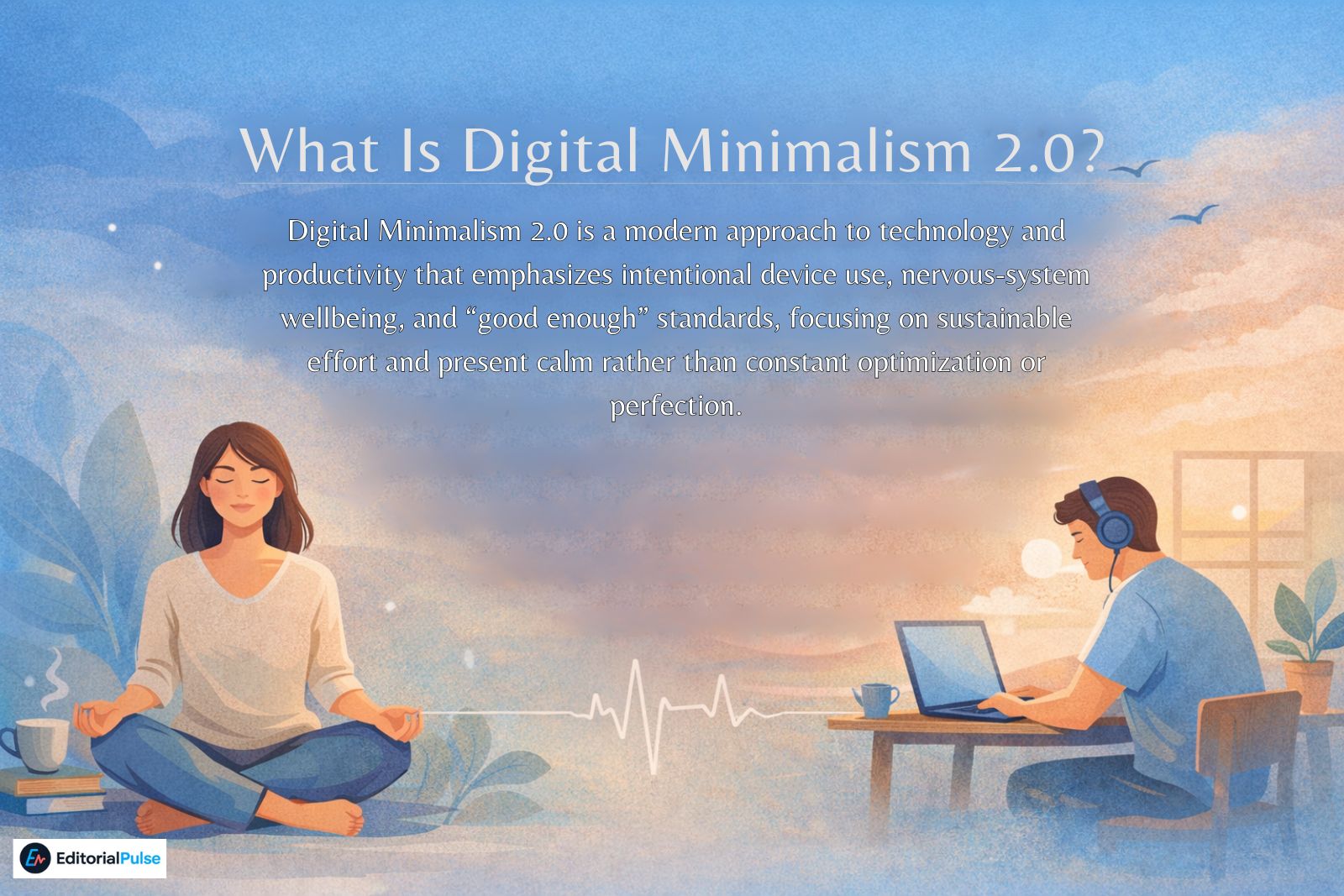
Digital Minimalism 2.0 is a modern approach to productivity and technology use that prioritizes nervous-system regulation, present wellbeing, and sustainable effort over constant optimization.
Unlike earlier forms of digital minimalism, it doesn’t aim to reduce technology at all costs. It aims to reduce strain—by embracing “good enough” standards and imperfect action in a permanently connected digital world. Ignoring these signals doesn’t make you disciplined. It makes stress invisible.
The Core Idea: Imperfect Action Over Self-Perfection
At the heart of Digital Minimalism 2.0 is a simple but radical idea:
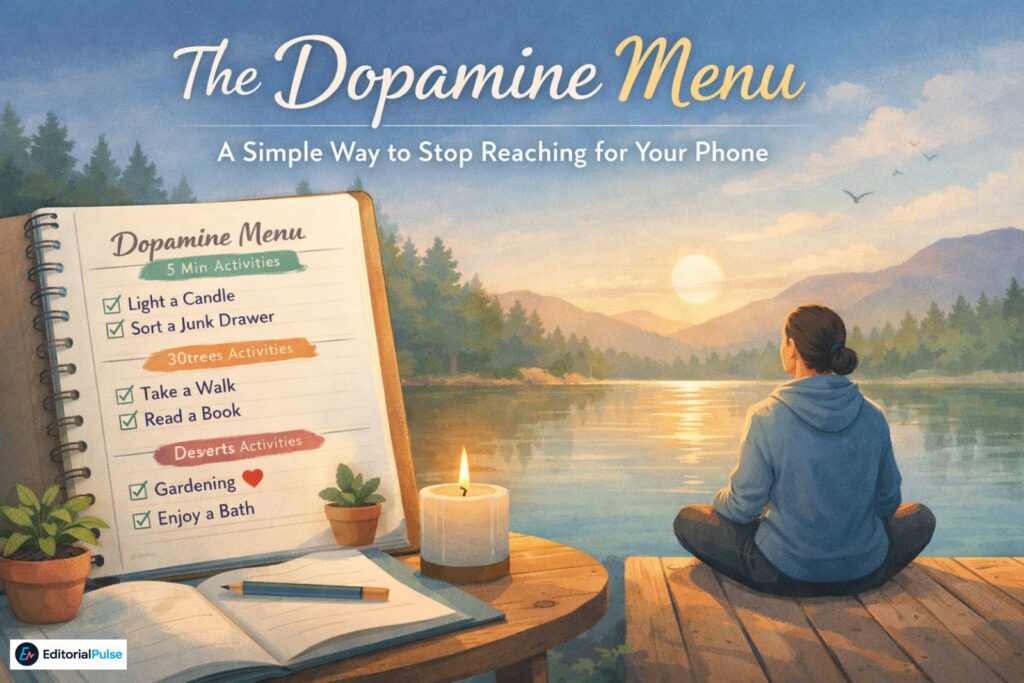
Stop trying to do things perfectly. Start doing them well enough to protect your nervous system.When momentum feels harder than perfection, pre-chosen micro-dopamine options can help you act instead of optimize.nlike earlier forms of digital minimalism
“Good enough” isn’t about lowering standards or caring less. It’s about recognizing that constantly optimizing your digital life comes with hidden costs—mental load, physical tension, and emotional fatigue.
Instead of asking:
-
Is this the most efficient workflow?
-
Am I maximizing output?
-
Can this system be improved?
You ask:
-
Is this good enough without draining me?
-
Does this tool help—or does it quietly tax me?
-
Can I stop here and still be okay?
These questions are a form of digital discernment.
They shift productivity from automatic optimization into conscious decision-making.
In the age of AI-assisted tools, being able to evaluate what helps, what harms, and what is enough is a core critical thinking skill—one that protects both your output and your nervous system.
This is not about picking the perfect system, but making the correct choice for the moment.
Less analysis. Better decisions. More calm.
2026 Reality: Present Wellbeing Beats Future Optimization
Cultural definitions of success are evolving.
In previous years, the focus was on long-term optimization:
-
Build now, enjoy later
-
Sacrifice calm today for results tomorrow
-
Push through discomfort because it “pays off”
In 2026, many people are no longer willing to trade their present wellbeing for a hypothetical future version of life. The new goal isn’t a perfect life—it’s a peaceful afternoon.
That might mean:
-
Ending the workday without a headache
-
Closing the laptop without residual anxiety
-
Having enough mental space to be present later
Digital Minimalism 2.0 aligns with this shift. It accepts that modern life is saturated with digital tools, AI systems, cloud platforms, and constant communication—and that human capacity hasn’t expanded at the same rate.
Instead of asking people to keep up, it adjusts the expectation.
The Three Principles of Digital Minimalism 2.0
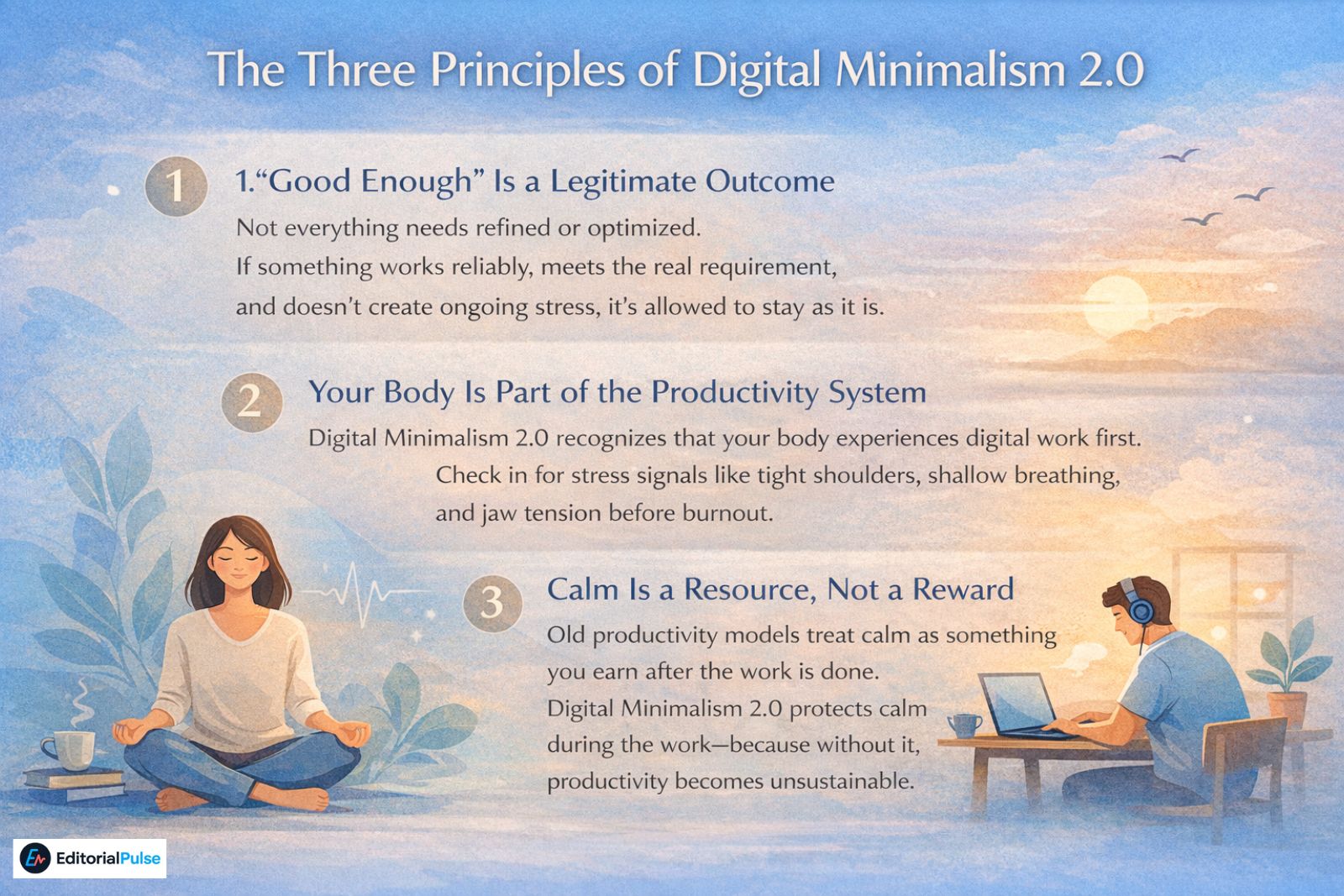
1. “Good Enough” Is a Legitimate Outcome
Not everything needs to be refined, optimized, or improved.
If something:
-
Works reliably
-
Meets the real requirement
-
Doesn’t create ongoing stress
It’s allowed to stay as it is.
Perpetual improvement often disguises itself as responsibility but creates endless mental loops. “Good enough” closes those loops.
2. Your Body Is Part of the Productivity System
Most productivity advice lives entirely in the mind—goals, plans, strategies, logic.
Digital Minimalism 2.0 recognizes that your body experiences digital work first.
Before burnout shows up as poor focus, it shows up as:
-
Tight shoulders
-
Shallow breathing
-
Restlessness
Ignoring these signals doesn’t make you disciplined. It makes stress invisible.
3. Calm Is a Resource, Not a Reward
Old productivity models treat calm as something you earn after the work is done.
Digital Minimalism 2.0 treats calm as something you protect during the work—because without it, productivity becomes unsustainable.
The Missing Practice: Body Connection Prompts
One of the most overlooked aspects of digital work is how automatically it starts.
You open a laptop.
Your body braces.
Your breath shortens.
our shoulders lift—often without you noticing.
Digital Minimalism 2.0 introduces a small but powerful interruption to that pattern: Body Connection Prompts.
How It Works
Before opening your work laptop—or starting a focused task—pause for 15 to 30 seconds and check in:
-
Are my shoulders tense?
-
Is my jaw clenched?
-
Is my breath shallow or held?
If the answer is yes, adjust first. Stretch, exhale slowly, drop your shoulders, soften your posture.
This isn’t mindfulness for the sake of mindfulness. It’s preventative care. Your body often recognizes digital overload before your mind does. Body connection prompts create a moment of choice instead of default tension.
Why “Good Enough” Productivity Actually Works Better
Perfection creates friction.
“Good enough” creates momentum.
When standards are humane:
-
You start more easily
-
You stop earlier
-
You recover faster
Concrete example:
A “good enough” email, for example, is three clear sentences sent in two minutes—rather than a perfectly phrased message polished for fifteen. The work still moves forward. The relationship stays intact. And your nervous system doesn’t carry unnecessary tension into the next task.
This approach increases consistency, preserves focus, and prevents burnout. Digital Minimalism 2.0 doesn’t eliminate ambition. It removes unnecessary strain.
Common Misunderstandings
“This sounds like giving up.”
It’s not. It’s choosing sustainability over self-pressure.
“Won’t standards slip?”
Only artificial ones. Essential quality remains.
“Isn’t this just laziness?”
No. Laziness avoids effort. Digital Minimalism 2.0 avoids unnecessary suffering.
What Digital Minimalism 2.0 Looks Like in Practice
-
Fewer tools, not smarter stacks
-
Notifications chosen deliberately, not tolerated
-
Work sessions that start calm, not braced
-
Acceptance that some days are lower-capacity days
-
Technology that supports life instead of dominating it
It’s less about control and more about relationship—how you relate to the digital world you live inside.
The New Productivity Standard
Digital Minimalism 2.0 reflects a quiet but important cultural change.
In a world that constantly asks for more attention, more responsiveness, and more output, choosing “good enough” is no longer a weakness. It’s a skill.
By 2026, productivity isn’t about squeezing every drop from your day. It’s about finishing work without carrying it in your body.
Sometimes the most productive thing you can do isn’t refining the system—it’s stopping while you still feel okay.
That’s not settling.
That’s adapting.
And in a digital world that never slows down, adaptation may be the most productive move of all.
FAQs
Q. What is Digital Minimalism 2.0?
Digital Minimalism 2.0 is a modern productivity approach that focuses on nervous-system health, digital self-care, and sustainable “good enough” standards. Unlike traditional minimalism, it doesn’t reject technology but emphasizes intentional use to reduce stress, increase focus, and maintain wellbeing in a connected digital world.
Q. Why is “good enough” productivity better than constant optimization?
“Good enough” productivity preserves attention, minimizes decision fatigue, and prevents digital burnout. By avoiding over-optimization, it allows for consistent output, protects your nervous system, and helps you maintain mental clarity and sustainable focus throughout the workday.
Q. How does digital work affect the nervous system?
Frequent device use triggers tension in the shoulders, shallow breathing, and heightened stress signals before your mind notices. This physiological strain reduces focus, energy, and cognitive performance, making nervous-system awareness essential for maintaining digital wellbeing and sustainable productivity.
Q. Is Digital Minimalism 2.0 anti-technology?
No. Digital Minimalism 2.0 is about intentional technology use, not rejection. It helps you leverage digital tools to support your life while minimizing stress, digital strain, and distractions, creating a healthier relationship with technology without compromising productivity.
Q. How can I start implementing Digital Minimalism 2.0 today?
Begin with Body Connection Prompts before digital work sessions to check tension and breathing. Use “good enough” standards for low-stakes tasks and reduce unnecessary notifications. These small changes protect your nervous system, improve focus, and make digital work more sustainable.
Final Verdict
Digital Minimalism 2.0 is not about doing less—it’s about doing enough without draining yourself. By embracing “good enough” standards, checking in with your body, and prioritizing present wellbeing over constant optimization, you can stay productive while protecting your mental and physical health. In a world of relentless digital demands, imperfect action is the new standard of sustainable productivity.
Related: Apps That Pay You to Walk — The Hidden Costs in 2025
| Disclaimer: This article is for informational and educational purposes only. It does not constitute legal, regulatory, or professional advice. While the content reflects current trends and best practices as of 2026, security and privacy risks may vary by individual or organization. Readers should assess their own circumstances and consult qualified professionals before making decisions regarding cybersecurity, data protection, or related practices. |