
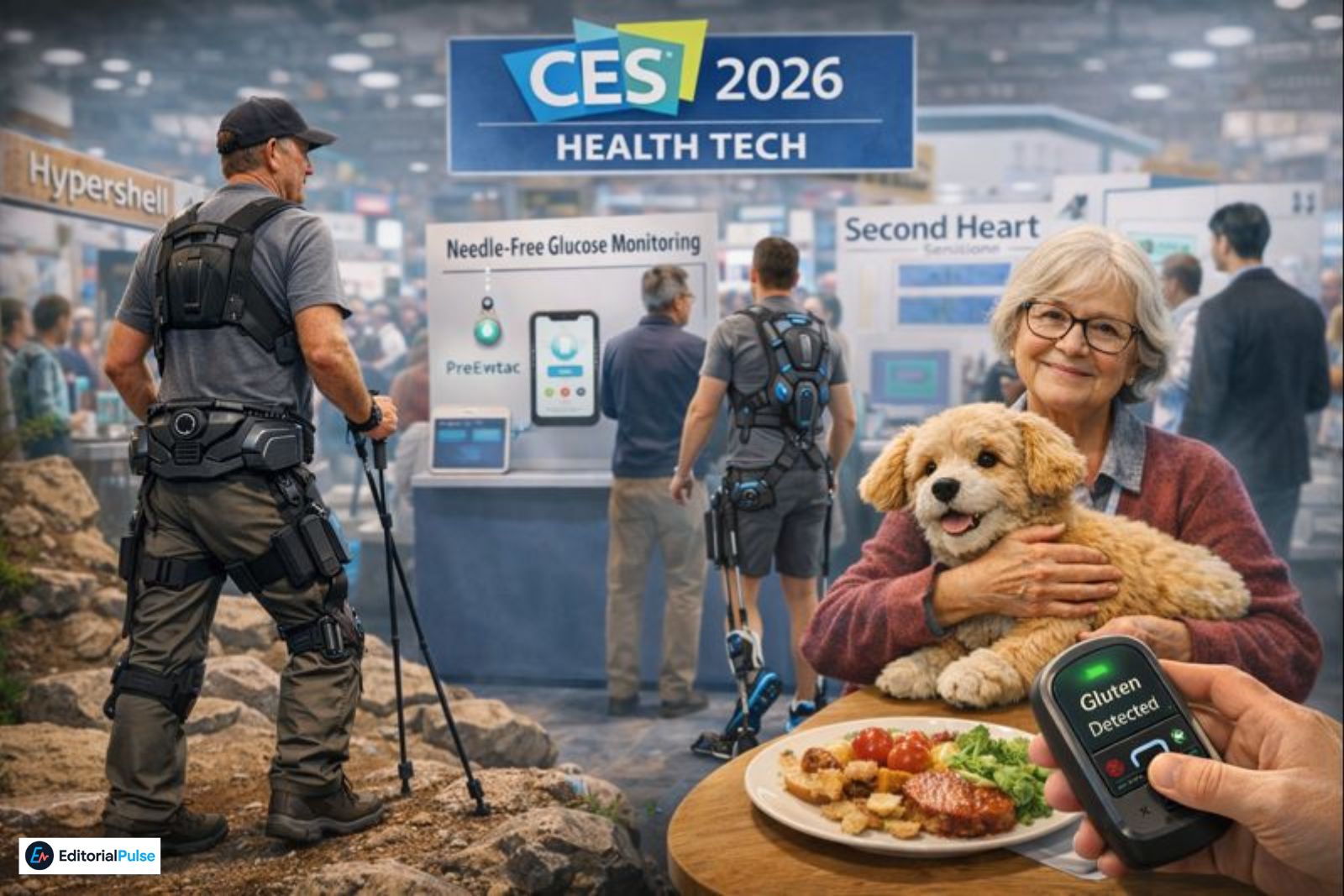
CES has never been subtle, and 2026 was no different. The show floor was chaotic. Screens flashed nonstop, demos ran on endless loops, and crowds jostled past at every turn. Every booth promised something “revolutionary,” but after speaking with Rena Goldman, Editorial Director at Everyday Health, one thing was clear: health tech is evolving beyond basic data tracking.
For Rena, her first CES was loud, high-energy, and exhausting—but in a way that was impossible to ignore. Yet the products that stuck with her weren’t the flashy, headline-grabbing gadgets. They were the ones that felt real—tools that could actually fit into daily life rather than just grabbing attention.
Movement Tech That Works With Your Body
Exoskeletons caught Rena’s eye right away. This year, they looked less like something out of sci-fi and more like wearable helpers. Several companies were offering different versions of exoskeletons to support different use cases, including knee movement, ankle movement, and more. When Rena tried on the products, she could feel the assist, but noted that it’s hard to fully evaluate without longer use.
These exoskeletons don’t do the work for you. They support it.
“It’s not about doing the work for you. It’s about helping you go farther while staying active,” Rena explained.
Walking past hikers using them to ease strain or seeing workers rely on them for repetitive tasks—it was obvious. The focus wasn’t extreme performance; it was comfort, longevity, movement you could actually keep up with.
Robotic Companions That Serve a Purpose
Emotional health had a quiet but strong presence. TomBot’s Jennie, a six-pound robotic dog for seniors with memory loss, drew attention without trying. Not flashy. No lights or gimmicks. Its purpose is companionship.
And people didn’t just glance. They lingered, interacted, and even chuckled softly at her little antics. Somehow, it felt real—more than you’d expect from a robot.
Rena pointed out that robotic pets like Jennie are no longer novelty items. Companies are striving to provide a product that helps reduce loneliness, ease anxiety, and offer consistent companionship. On top of that, these products work in places where live animals just aren’t practical or allowed. Watching people respond to Jennie made its value easy to understand.
It wasn’t just cute—it was quietly, practically useful.
Women’s Health Tech That Fits Seamlessly Into Life
Women’s health tech wasn’t front and center, but the few products that showed up were quietly useful. Peri is a little patch you wear that keeps track of perimenopause symptoms—hot flashes, night sweats—and sends real-world data to doctors. Petal, a tiny sensor that fits in a bra, monitors heart health and hormonal changes without you really noticing it’s there.
What mattered most, Rena noted, was how unobtrusive these tools were. They didn’t buzz or interrupt. They quietly collected meaningful information. Watching someone adjust a Petal sensor mid-conversation—almost forgetting it was there—made it clear how well it fit into daily life.
Blood Sugar Monitoring With Honest Messaging
Blood sugar monitors were everywhere—from lifestyle wearables to clinical devices and hybrids.
Her point was simple: these tools are useful, but they don’t replace medical testing or professional advice. Patterns, not diagnoses.
If these are effective, the value they provide is access to information more quickly and the ability to store and access data and trends over time via companion apps. This has the opportunity to inform more meaningful conversations with healthcare professionals or care teams.
Quiet Products That Make a Real Difference
Some of the most meaningful tech advancements weren’t the most flashy or attention-grabbing products.
Allergen Alert, for instance, is a small portable device that tests food for allergens like gluten or dairy in minutes.
For people managing food sensitivities, it’s huge. The potential for someone to test a snack and exhale in relief can be life changing. Rena mentioned its relevance will likely grow, not because it’s exciting, but because it quietly makes life easier.
No Single Must-Have Device
When asked about the must-have product of 2026, Rena didn’t name one. And that makes sense. It depends entirely on the person. One individual might benefit from a robotic companion, another from a wearable, someone else from a small allergen tester. CES 2026 wasn’t about one standout—it was about options, practical solutions, and usefulness.
What Really Stood Out at CES 2026
Despite the noise, crowds, and flashing lights, the strongest health technology shared one trait: practicality.
“The best technology quietly makes life easier, safer, and more comfortable,” Rena summarized.
From exoskeletons that support movement, to robotic companions that ease loneliness, to subtle health wearables and devices offering reassurance about food safety, CES 2026 highlighted a shift. The most lasting innovations didn’t demand attention—they blended into real routines and solved real problems. Technology that supports people instead of overwhelming them.
We’ll keep following where this technology actually shows up in everyday life at Editorial pulse.