Online shopping didn’t suddenly become smarter. It became faster at reacting.
By 2026, most digital stores no longer wait for you to search. They respond to how you scroll, hesitate, compare, and abandon—often in real time. This shift toward hyper-personalized shopping is powered by artificial intelligence, predictive analytics, and increasingly adaptive interfaces. When it works, shopping feels effortless. When it doesn’t, it feels unsettling.
Gartner projects that nearly 75% of customer interactions will be AI-mediated by 2026, driven largely by retail, finance, and digital platforms. That statistic is impressive—but also misleading. The real competitive edge isn’t how much AI a brand uses. It’s where the brand chooses not to use it.
This article is written for retail leaders, product designers, and CX strategists building AI-driven shopping experiences—and for consumers who want to understand why stores now seem to “read their minds.” More importantly, it explains where hyper-personalization breaks down, and why restraint—not automation—is emerging as the winning strategy.
What Hyper-Personalized Shopping Actually Means in 2026
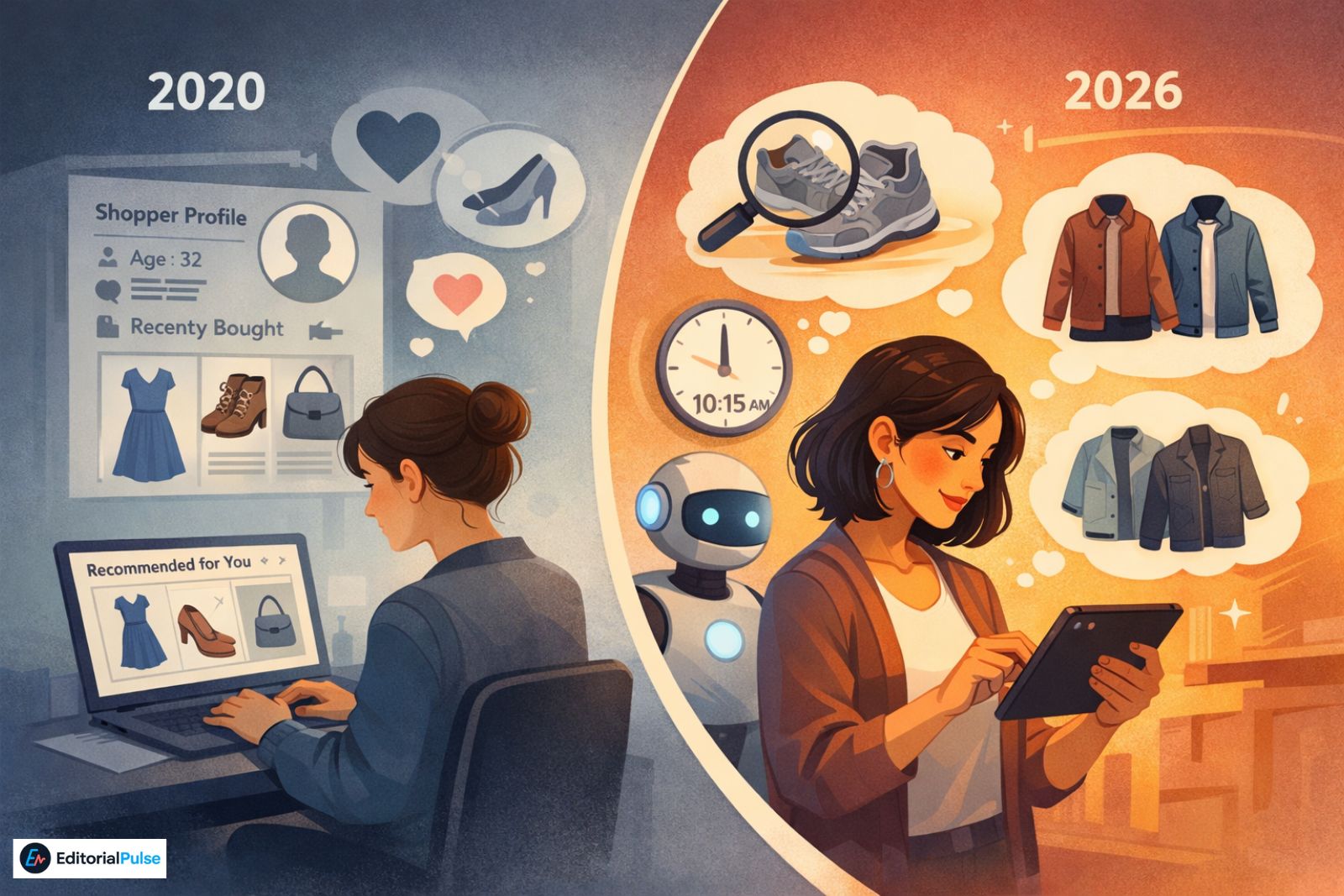
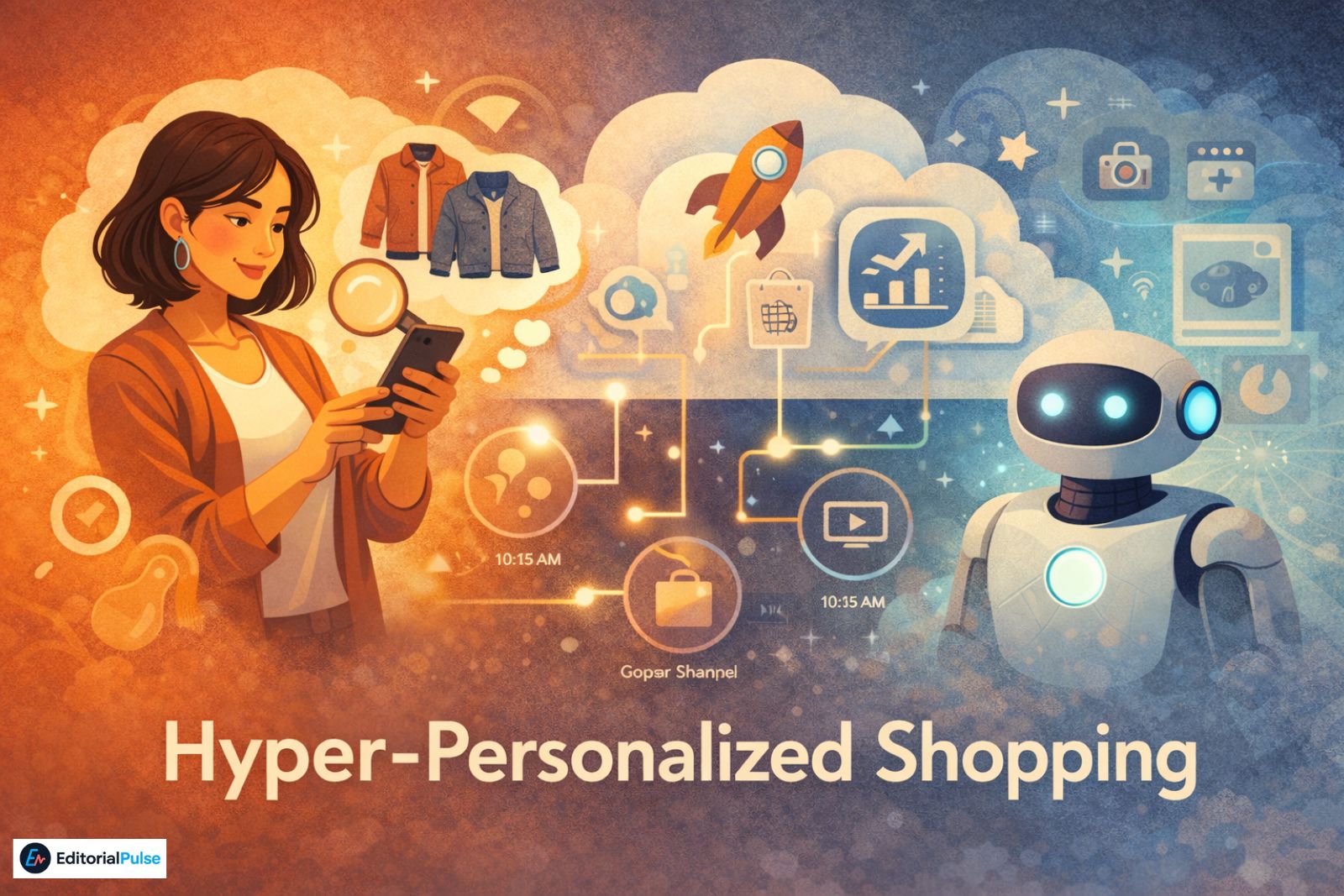
Hyper-personalized shopping refers to AI-driven, real-time customization of the shopping experience based on moment-by-moment behavior rather than static customer profiles.
Hyper-personalized shopping in 2026 is less about prediction accuracy and more about emotional safety. AI isn’t just recommending products—it’s learning when not to intervene, preserving trust and brand consistency. This is not the old “customers also bought” logic.
Modern hyper-personalized systems adapt based on a variety of temporal and contextual signals, including:
-
Scroll speed and hesitation – noticing where a shopper pauses or accelerates through products
-
Comparison behavior – detecting when items are being actively compared
-
Time of day and device – adjusting the experience based on context
-
Visual interactions – zooming, swiping, or dwelling on product images
-
Session-level intent – responding to what the shopper is trying to accomplish right now, rather than relying solely on past purchases
The key shift is temporal relevance. Instead of asking “Who is this customer?”, AI now asks “What is happening right now?” This allows brands to provide helpful, non-intrusive guidance that feels natural rather than forced.
By 2026, the most effective systems balance accuracy with empathy. They know when a recommendation could be overwhelming, when to stay silent, and how to maintain brand consistency—all while guiding users toward meaningful purchases.
Why Hyper-Personalization Accelerated So Quickly
Three forces collided.
1. Consumers Lost Patience for Generic UX
Relevance now competes with price as a conversion driver. Shoppers don’t abandon carts only because of cost—they leave because the experience feels tone-deaf.
2. AI Systems Finally Matured
Retail stacks now combine:
-
Machine learning
-
Natural language processing
-
Computer vision
Delivered via cloud platforms rather than bespoke infrastructure.
3. Discovery Became Visual, Not Textual
Social media trained users to discover products through images. Visual search feels natural; keyword search increasingly feels slow.
McKinsey has observed that “next-best-experience” AI models are already lifting customer satisfaction by roughly 20% among early adopters. But that same research quietly shows a ceiling: beyond a point, more automation stops helping.
How AI Predicts Your Shopping Intent (Without You Noticing)
Most people think personalization is powered by massive customer profiles. In reality, short-term signals dominate.
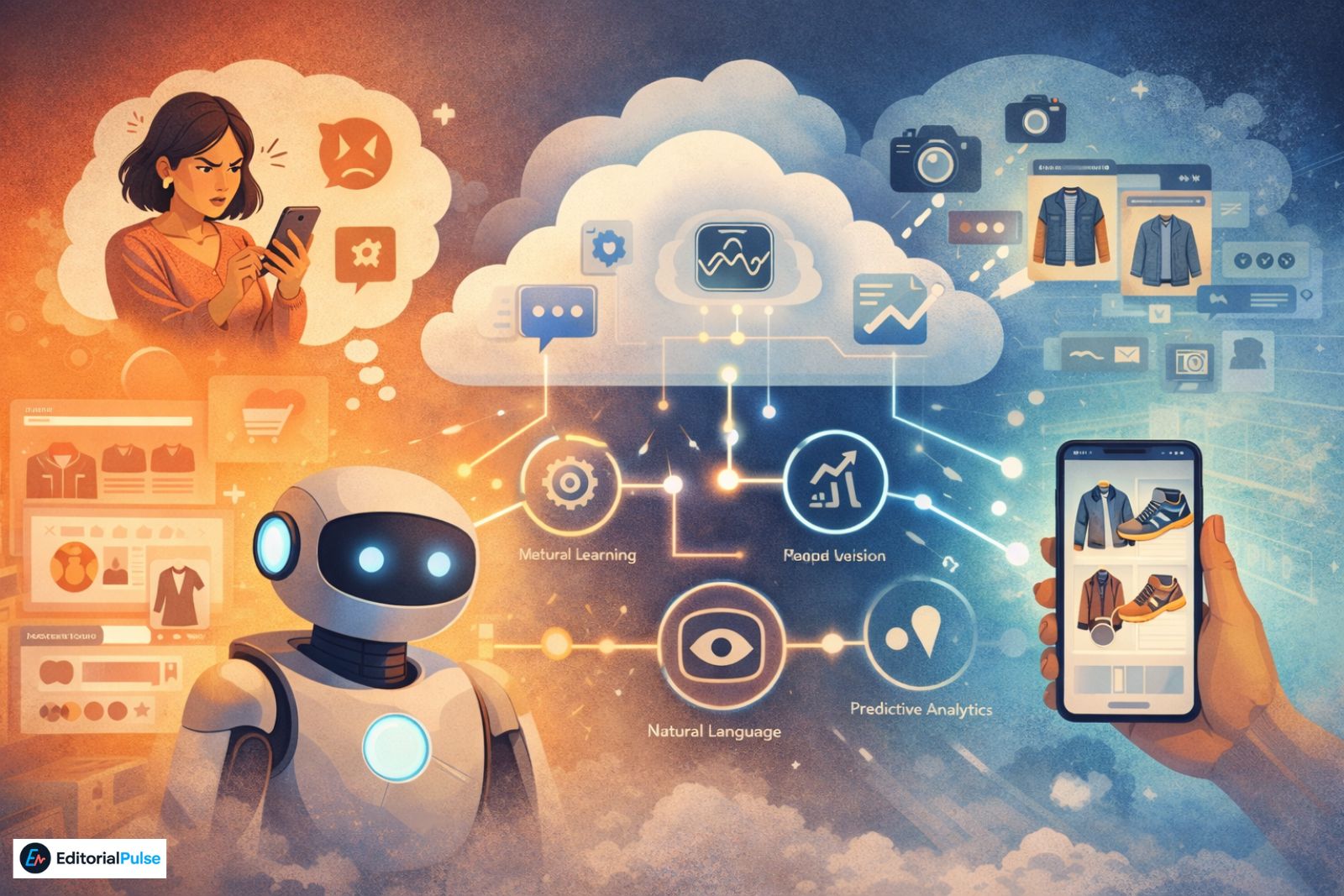
Step 1: Behavioral Signals
AI models track:
-
Scroll velocity
-
Pauses on price or reviews
-
Tab switching
-
Cart friction
Step 2: Intent Classification
Predictive systems infer whether you’re:
-
Browsing casually
-
Comparing alternatives
-
Price-checking
-
Ready to purchase
This happens within seconds.
Here’s where many retailers fail: they collect signals but still enforce static rules. True hyper-personalization allows the AI to override prewritten logic in real time.
Step 3: Adaptive Response
Layouts, product order, messaging, and incentives adjust dynamically—often invisibly.
Step 4: Session-Level Learning
The model recalibrates continuously during the same visit.
Visual Search: Powerful—and Easy to Overdo
Visual search is now foundational across fashion, beauty, and home retail.
Users upload:
-
Photos
-
Screenshots
-
In-store images
AI matches shape, color, texture, and style against catalogs.
For Gen Z and Gen Alpha, this is no longer a novelty. It’s becoming the default discovery behavior.
But visual search introduces a risk few brands discuss: emotional misinterpretation.
A War Story: When Hyper-Personalization Went Wrong
A few years ago, a luxury fashion brand rolled out aggressive hyper-personalization across its catalog.
A customer purchased a black cocktail dress. Within hours, the system began recommending funeral attire—black veils, somber accessories, memorial-themed collections. The AI was statistically correct. Emotionally, it was catastrophic.
The customer never returned.
This wasn’t a data failure. It was a context failure—an example of the “uncanny valley” effect in retail AI, where personalization becomes too literal to feel human.
The Cost of Over-Automation (Algorithm Fatigue)
Over-automation has a measurable downside.
In 2025, a large beauty retailer quietly tested a 100% Generative UI, where layouts, visuals, and merchandising changed every session. The result surprised leadership:
-
12% drop in customer lifetime value
-
Higher bounce rates among repeat buyers
-
Lower brand recall
Users reported feeling disoriented. If the store looks different every time, shoppers don’t feel like they’re “at” a brand—they feel like they’re inside a simulation.
This phenomenon is increasingly referred to as algorithm fatigue: when constant optimization erodes familiarity and trust.
| To avoid being trapped in a ‘personalization bubble,’ power users often utilize a shadow browser to browse as a fresh user. This forces the AI to show generic layouts and prices, which is a great way to verify if you are being targeted with ‘personalized’ price hikes. |
The Kill-Switch Protocol Every Retail AI Needs in 2026
One of the most overlooked safeguards in hyper-personalization is what some teams now call the Emotional Buffer.
Every decision engine should include a kill-switch that reverts the experience to a safe, static mode when sensitive intent is detected.
Trigger examples:
-
“hospital”
-
“lawyer”
-
“emergency”
-
“funeral”
-
“insurance claim”
When these appear, personalization should pause, not intensify. No generative layouts and aggressive recommendations. No “helpful” upsells.
This single protocol prevents the most damaging personalization failures—and very few retailers have implemented it yet.
Generative UI vs. the Real 2026 Opportunity (A Hot Take)
While much of the industry is obsessed with Generative UI, I believe the bigger opportunity is being missed.
Voice-first predictive shopping, layered into smart glasses and ambient devices, will outperform dynamic layouts for high-intent purchases. Retailers are optimizing screens while ignoring hands-free, context-aware environments entirely.
In 2026, the most disruptive experiences won’t look futuristic. They’ll feel invisible.
The 4 D’s of Hyper-Personalization (Still Relevant, Still Misused)
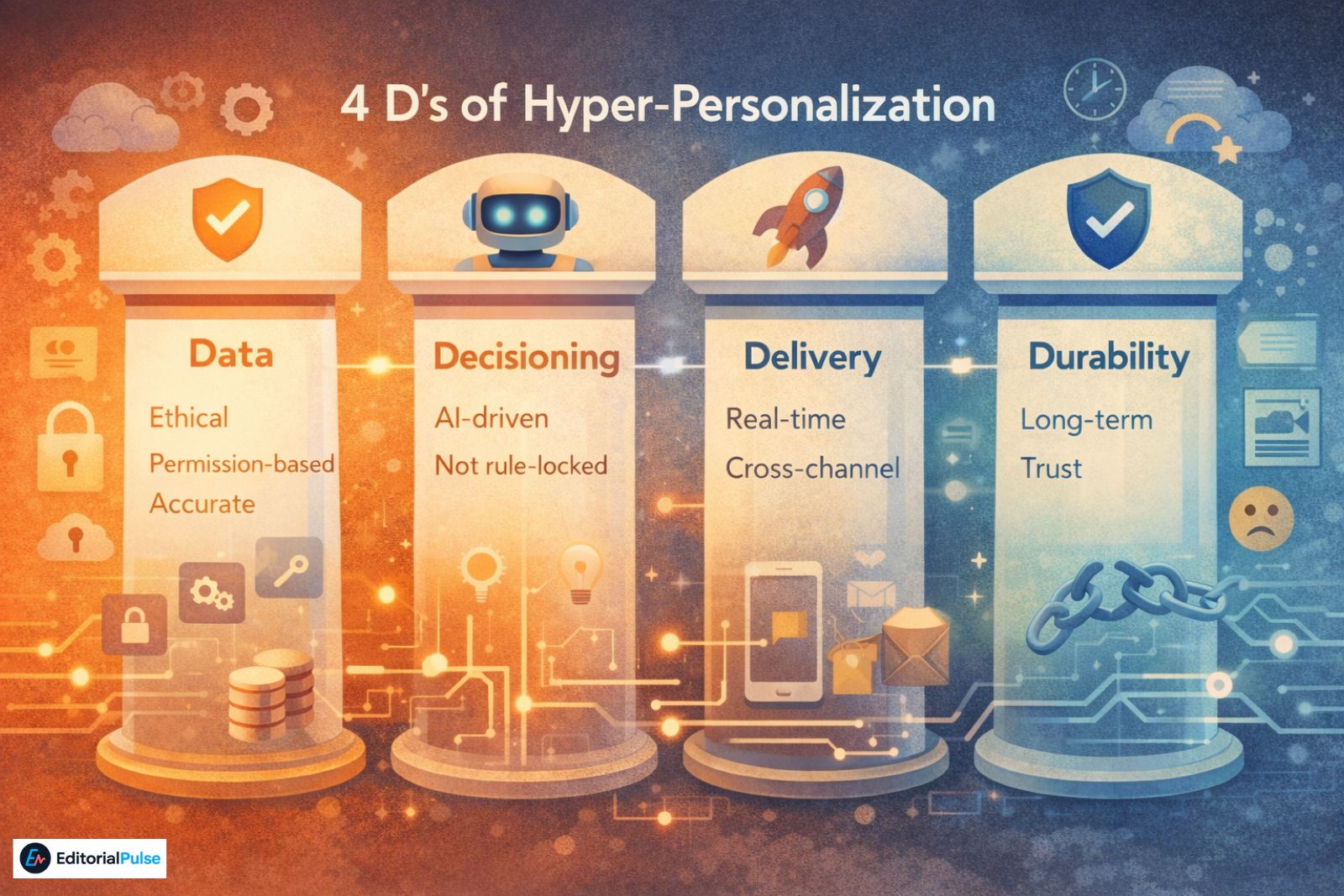
Most serious MarTech strategies still align around four pillars:
-
Data – Ethical, permission-based, accurate
-
Decisioning – AI-driven, not rule-locked
-
Delivery – Real-time, cross-channel
-
Durability – Designed for long-term trust
Most failures happen at the fourth D. Systems optimize for conversion but forget continuity.
What Restraint Looks Like in Practice
A restrained system doesn’t trigger a discount the moment a shopper pauses.
It waits.
It looks for a second signal—comparison behavior, tab switching, repeated price checks—before acting. In many real implementations, doing nothing for 30 seconds converts better than reacting instantly.
That pause is not inefficiency. It’s respect.
The Trade-Off Consumers and Brands Must Accept
Hyper-personalization saves time. It also concentrates power.
For consumers:
-
Understand how recommendations are shaped
-
Recognize when convenience nudges behavior
-
Be aware of sustainability and data trade-offs
For brands:
-
Explain why experiences adapt
-
Offer meaningful controls
-
Design for emotional safety, not just speed
Trust—not novelty—will define category leaders in 2026.
FAQs
Q. What is hyper-personalized shopping?
Hyper-personalized shopping is an AI-driven approach that uses real-time behavioral data—such as browsing patterns, dwell time, and interaction signals—to adapt shopping experiences dynamically for each individual user. Unlike traditional personalization, it does not rely on static segments or past purchases alone, but continuously adjusts content, recommendations, and layout based on live intent.
Q. Why can hyper-personalization fail?
Hyper-personalization fails when systems optimize only for short-term conversion and ignore emotional context, brand consistency, or user comfort. Over-automation can feel intrusive or disorienting, reducing trust. Without restraint and safeguards, personalization shifts from helpful to unsettling, which ultimately harms long-term customer relationships.
Q. What is algorithm fatigue?
Algorithm fatigue occurs when excessive or constant personalization overwhelms users, causing confusion, reduced trust, and declining lifetime value. Shoppers may feel the experience is unpredictable or manipulative. In 2025, several retailers observed lower engagement when generative interfaces changed too frequently, triggering what many describe as the “uncanny valley” effect in digital shopping.
Q. Is hyper-personalization replacing traditional UX?
No. Hyper-personalization is not replacing traditional UX—it is layered on top of it. The most effective systems blend adaptive intelligence with stable, familiar design elements. Consistent navigation, predictable layouts, and recognizable brand cues provide emotional grounding while AI handles contextual adjustments behind the scenes.
Q. What should retailers prioritize in 2026?
Retailers should prioritize restraint, transparency, emotional safeguards, and long-term trust over maximum automation. This includes explaining why recommendations appear, limiting intrusive triggers, and implementing “safe modes” during sensitive searches. Brands that balance intelligence with empathy will outperform those that chase automation alone.
Q. How does hyper-personalization affect long-term customer value?
When implemented responsibly, hyper-personalization can increase lifetime value by reducing friction and decision fatigue. However, overly aggressive systems have been shown to reduce LTV by creating discomfort or brand detachment. Long-term value depends on predictive accuracy combined with emotional awareness, not personalization volume.
Q. What is an emotional safeguard in AI personalization?
An emotional safeguard is a rule or system layer that temporarily limits personalization during sensitive moments—such as searches related to health, legal issues, or emergencies. In 2026, leading retailers use these safeguards to revert to stable, neutral interfaces, preventing inappropriate recommendations and preserving user trust.
Conclusion
Hyper-personalized shopping isn’t about predicting everything a customer will buy. It’s about removing friction without removing humanity.
As AI systems become better at reading intent in real time, the real differentiator won’t be intelligence. It will be judgment.
The brands that win in 2026 won’t feel smarter. They’ll feel calmer, less pushy, and easier to trust.
Related: Why Privacy in 2026 Requires a Digital Immune System
| Disclaimer: This article is for informational purposes only and reflects trends, predictions, and best practices in hyper-personalized shopping for 2026. It does not constitute professional, financial, or legal advice. Results may vary by industry, implementation, and market conditions. Readers should exercise their own judgment when applying any strategies discussed. |