
If you’re looking up “turning my life around with crypto,” you’re probably not hoping for a miracle trade. More often, it means you’re looking for stability, forward momentum, or a way to stop feeling financially stuck.
It’s worth saying this upfront: crypto is volatile. Prices move fast, headlines change overnight, and mistakes can be costly. Anyone pretending otherwise isn’t being honest. This is why understanding why crypto crashes and whether it recovers can help put market swings in perspective.
That said, volatility doesn’t mean chaos — and in 2025, crypto no longer exists only on shady exchanges or hype-driven apps.
This guide focuses on how real people have used crypto responsibly — through investing, careers, and long-term positioning — to improve their financial situation without gambling their future.
You’ll learn:
-
What “turning your life around” realistically looks like
-
The legitimate paths people take
-
Common mistakes that quietly derail progress
-
A simple framework designed for today’s market, not 2017 hype
No promises. No shortcuts. Just clarity.
What “Turning My Life Around With Crypto” Actually Means
For most people, turning their life around with crypto doesn’t mean becoming rich.
It usually means:
-
Reducing financial anxiety
-
Building a second income stream
-
Gaining career optionality
-
Creating long-term exposure to a growing asset class
Crypto works best as leverage layered onto an existing life, not as an escape from one.
The 5 Legitimate Ways People Turn Their Lives Around With Crypto
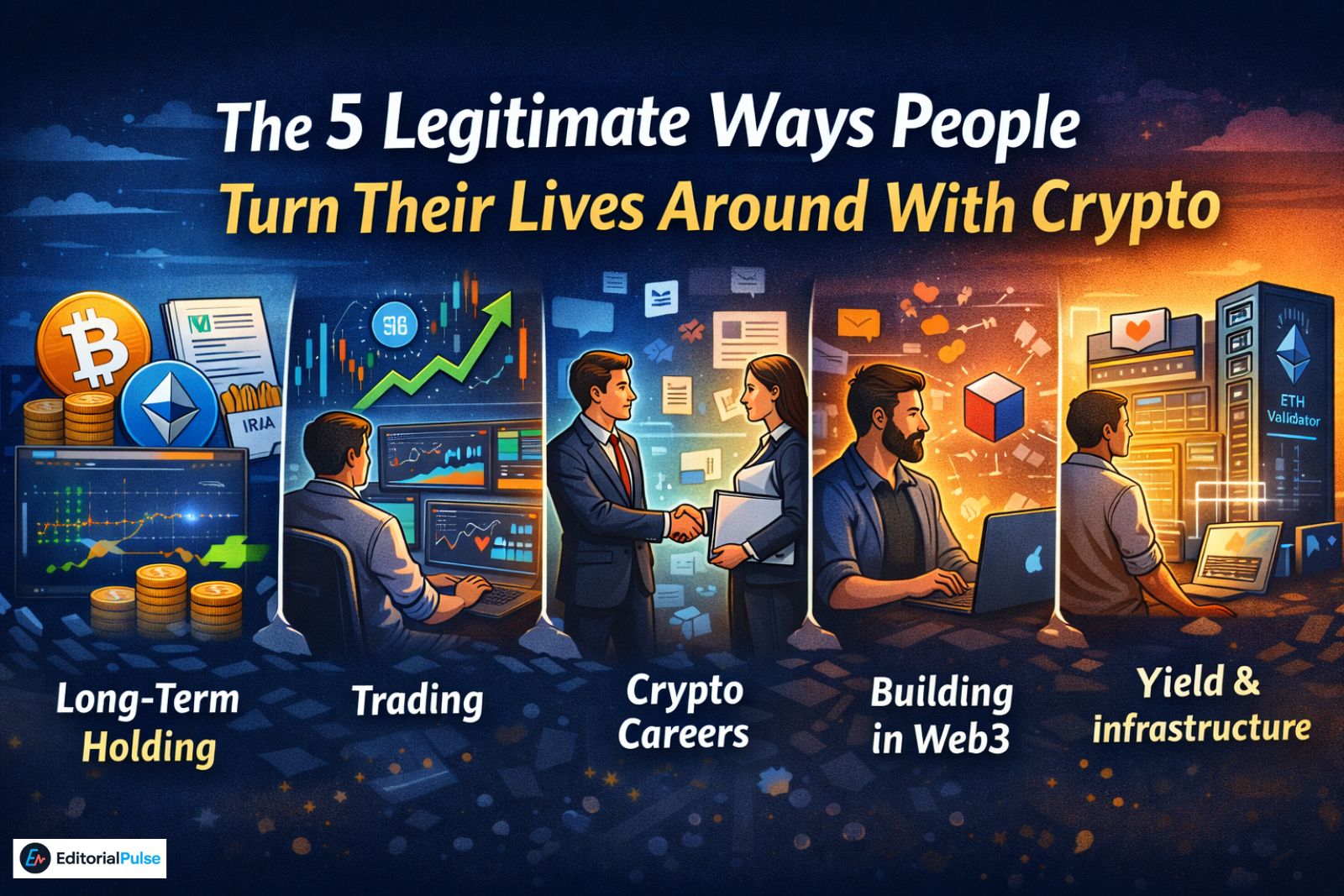
In practice, sustainable success tends to follow one (or a combination) of five paths.
1. Long-Term Holding (The Stability Path)
This is the quiet foundation behind many real success stories.
What it involves
-
Gradual accumulation of major assets (Bitcoin, Ethereum)
-
Holding through full market cycles
-
Minimal trading and emotional decision-making
Historically, Bitcoin has not shown negative returns across rolling four-year holding periods, based on long-term data analyses available up to 2024. While past performance never guarantees future results, time has consistently reduced risk for disciplined holders, making it a key consideration when evaluating cheap crypto to buy now.
The ETF Effect (2025 Reality)
One major shift: long-term crypto exposure no longer requires managing private keys or using crypto-native platforms.
In 2025, many people gain exposure through:
-
Bitcoin and Ethereum ETFs
-
Retirement accounts like IRAs or 401(k)s
-
Traditional brokerages (e.g., Fidelity, BlackRock products)
For risk-averse individuals, this has normalized crypto as a long-term asset, not a speculative side bet.
Best for
-
Beginners
-
Long-term planners
-
Anyone prioritizing stability over excitement
2. Trading (High Skill, High Failure Rate)
Trading remains the most misunderstood path.
Multiple broker disclosures and regulatory studies consistently show that over 70% of retail traders lose money, largely due to leverage, poor risk controls, and emotional decision-making.
When trading makes sense
-
You already have risk capital
-
You treat it like a business
-
You accept losses as part of the process
For most people, trading is optional — not required.
3. Crypto Careers (The Underrated Life-Changer)
One of the most reliable ways people change their lives with crypto is by working in the industry, not speculating in it.
In 2024–2025, demand remains strong for:
-
Community and social managers
-
Content writers and researchers
-
Compliance, legal, and risk roles
-
Operations and product specialists
Many professionals increase income simply by switching industries while keeping the same skill set.
This path offers salary stability + upside exposure, which is rare in traditional finance.
4. Building in Web3 (Entrepreneurial Path)
Some people turn crypto into a life change by building:
-
Tools
-
Platforms
-
Education products
-
Infrastructure services
This path offers asymmetric upside — but also high failure rates. It’s best pursued after understanding the ecosystem, not as a first step.
5. Yield, Staking, and Infrastructure
Less exciting, but increasingly relevant.
Examples include:
-
Validator infrastructure
-
Conservative yield strategies
This path suits people with capital, patience, and risk literacy. It is not passive income — but it can be predictable when managed carefully. These patterns reflect what’s consistently observed across multi-cycle crypto participants, not one-off bull market success stories.
Also Read: Primary Crypto Market 2025: How to Invest, Unlocks, FDV & Launchpads Explained
A Realistic Mini Case Study
Starting point
-
Early 30s
-
~$48,000 annual income
-
No prior crypto experience
Actions taken
-
Built long-term BTC/ETH exposure
-
Learned crypto research and writing
-
Contributed part-time to a DAO
-
Reinvested earnings conservatively
Outcome
-
Diversified income
-
Emergency fund built
-
Reduced financial stress
-
Increased career flexibility
Not rich — but no longer panicked.
That’s what progress usually looks like.
The 7 Mistakes That Quietly Ruin Everything
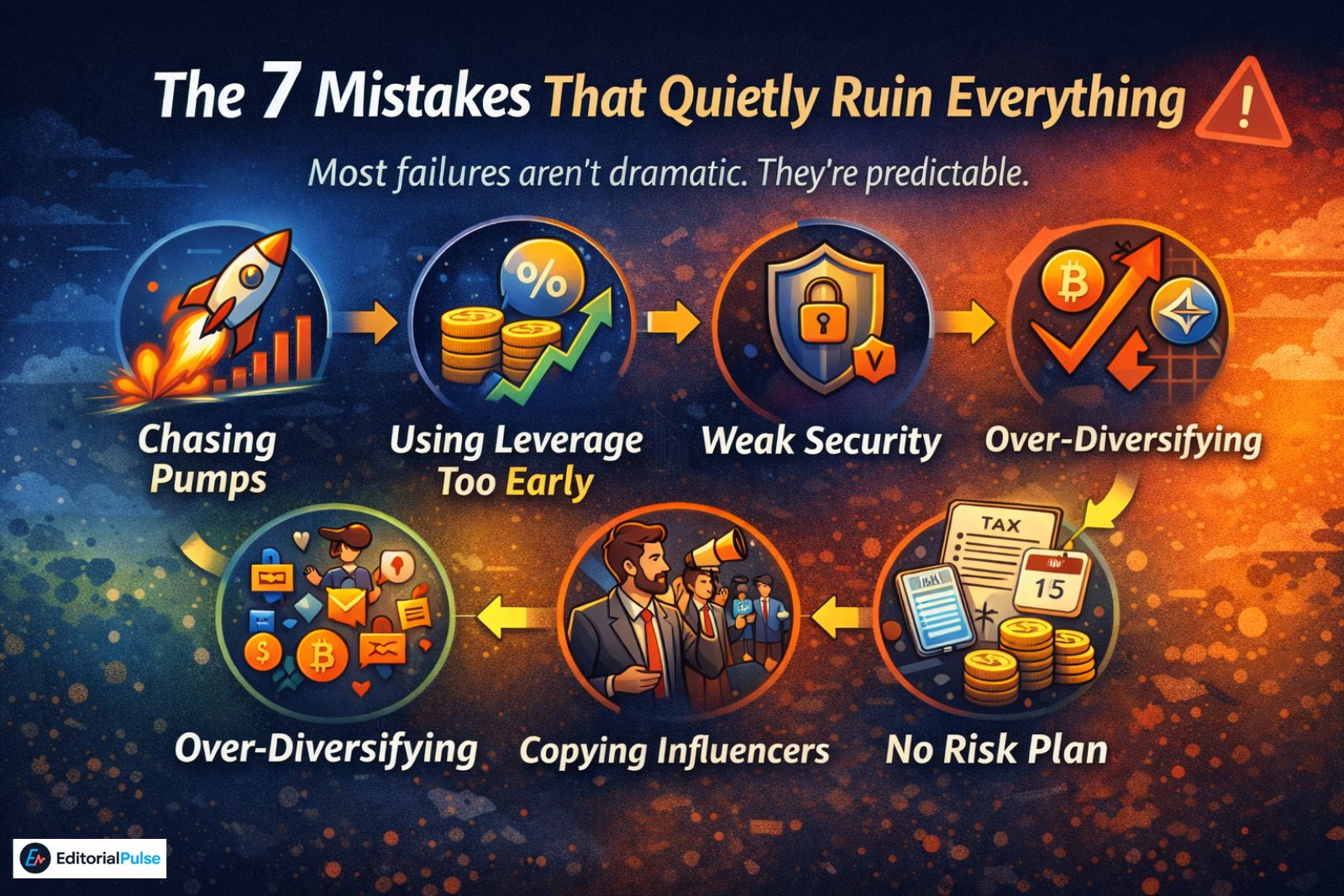
Most failures aren’t dramatic. They’re predictable.
-
Chasing pumps
-
Using leverage too early
-
Weak security practices
-
Over-diversifying as a beginner
-
Blindly copying influencers
-
No risk or exit plan
-
Ignoring taxes
In most jurisdictions, every crypto trade is a taxable event, even if no money is withdrawn. This alone has ended many otherwise successful strategies, a reality that underscores the need for critical thinking in the age of AI.
A Simple 2025 Framework You Can Use
The 4-Layer Crypto Model
-
Safety – Self-custody, backups, basic operational security
-
Base Exposure – BTC, ETH, or regulated ETFs
-
Growth Layer – One focused income or skill path
-
Optional Upside – Small experimental capital
No layer should exist without the ones below it.
Is Crypto Still Worth It in 2025?
Yes — but the opportunity has changed.
Crypto is no longer about early speculation. In 2025, the advantage lies in infrastructure, regulated access, long-term positioning, and skill-based participation.
The people still benefiting aren’t chasing trends. They’re building exposure slowly, earning within the ecosystem, or using crypto as a supporting financial layer — not a gamble.
FAQs
Q. Can crypto really change your life?
Yes, crypto can change your life by improving financial stability, creating new career opportunities, or providing long-term investment exposure. For most people, meaningful results happen gradually through disciplined investing, skill-building, or industry work—not overnight gains or speculation.
Q. Is it too late to turn my life around with crypto?
No, it’s not too late. In 2025, crypto opportunities still exist through long-term investing, crypto-related careers, and infrastructure roles. The focus has shifted away from quick speculation toward utility, regulation, and skill-based participation.
Q. How much money do I need to start with crypto?
You don’t need much money to start with crypto if your focus is learning, earning through skills, or long-term investing. Trading typically requires more capital and carries higher risk, while careers and education-based paths can start with minimal financial investment.
Q. Is crypto risky in 2025?
Yes, crypto is still risky in 2025 due to price volatility, security risks, and regulatory changes. However, risk can be reduced through long-term strategies, diversification, proper security practices, and avoiding leverage—though it can never be fully eliminated.
Q. What’s the safest way to start with crypto?
The safest way to start with crypto is to focus on long-term exposure to established assets, avoid leverage, use secure custody or regulated products like ETFs, and spend time learning before taking on additional risk.
Q. Can crypto replace a full-time job?
Crypto can replace a full-time job for some people, but usually only after building relevant skills, experience, or income streams within the ecosystem. For most beginners, crypto works best as a supplement to existing income before becoming a primary source.
Q. Are crypto careers still in demand?
Yes, crypto careers are still in demand in 2024–2025, especially in non-technical roles such as compliance, research, operations, marketing, and community management. As the industry matures, demand for traditional professional skills continues to grow.
Conclusion
Turning my life around with crypto didn’t mean sudden wealth for most people. It meant regaining control.
Control over money.
Control over career direction and over long-term options.
Crypto isn’t magic. It’s leverage.
Used recklessly, it magnifies mistakes.
Used deliberately, it compounds effort.
The next step isn’t finding a coin.
It’s choosing a path — and sticking with it longer than feels comfortable.
Related:
| Disclaimer: This article is for informational and educational purposes only and does not constitute financial, investment, or legal advice. Cryptocurrency involves risk and market volatility, and past performance does not guarantee future results. Always conduct your own research and consult a qualified professional before making financial decisions. |